The Brain Autonomy and Resiliency (BAR) Lab is exploring how the brain interacts with complex, real-world systems to develop technologies that improve human health and performance. Led by Dr. Saman Sargolzaei, the lab combines neuroscience, engineering, and computational approaches to study neurological disorders and human interaction with intelligent technologies.
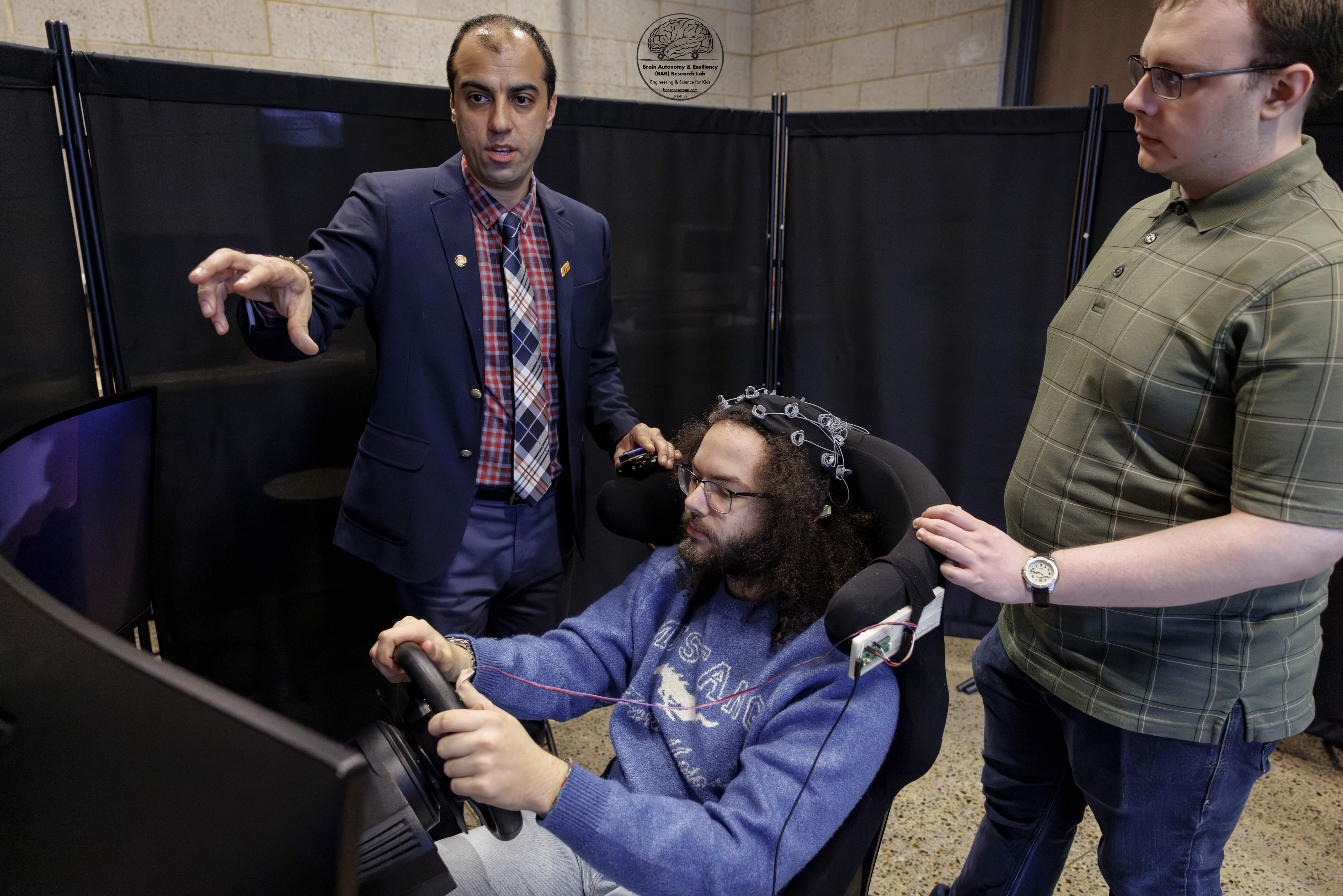
One of the lab’s key research thrusts is intelligent transportation. Using an extended reality-based driving simulator, the team can safely study how drivers interact with advanced vehicle technologies while collecting brain and physiological data. Integrated with EEG (electroencephalography), heart-rate monitoring, and eye-tracking systems, the simulator allows researchers to measure attention, cognitive load, and decision-making in controlled but realistic driving scenarios.
This research thrust has been made possible through extensive partnerships, including collaboration with the Resilient Autonomous Networked Control Systems (RANCS) group, which provides additional expertise and infrastructure to support our work.
“We are exploring how different forms of automation and driver assistance interact with the brain’s attentional and decision-making processes,” says Dr. Sargolzaei. “Understanding this can reveal important insights about engagement, safety, and trust, which are critical as transportation systems become more intelligent and autonomous.”
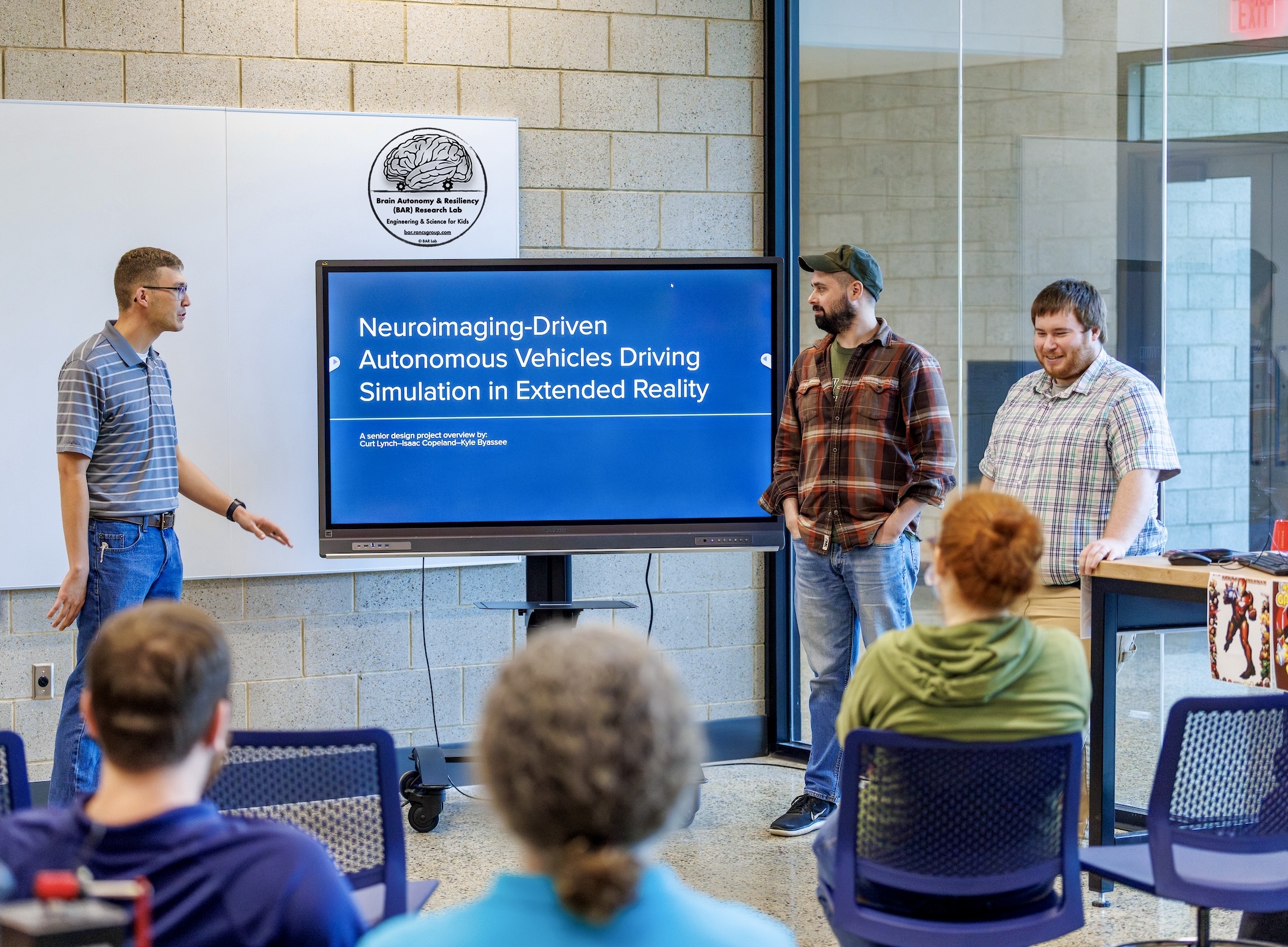
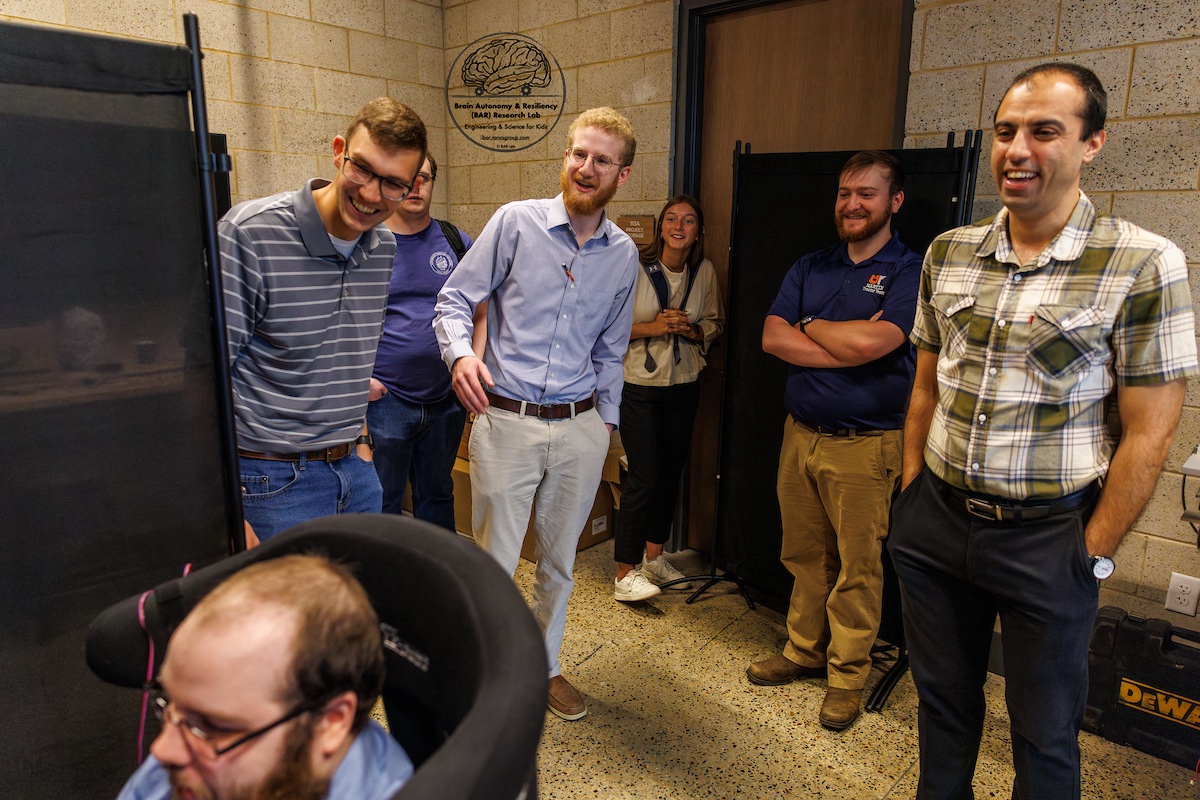
This research has been made possible through the contributions of several undergraduate lab members who have worked on this project over time, including Curt Lynch, Isaac Copeland, Kyle Byassee, Seth Hatchett, and Connor Viana. Together, they helped design experiments, develop software tools, collect physiological and neural data, and analyze complex brain signals, demonstrating the collaborative nature of the lab’s work.
“Our work at BAR Lab is built on years of foundational research and collaboration,” Dr. Sargolzaei adds. “By integrating neuroscience, engineering, and computational approaches, we aim to develop technologies that restore movement and communication for individuals with neurological disorders.”
The lab’s studies not only examine attention and cognitive load but also inform the development of adaptive brain-computer interfaces, which can decode neural signals in real time to control devices such as robotic limbs or communication tools. These systems have the potential to restore mobility and autonomy for individuals with neurological disorders.
“This research is deeply collaborative,” Dr. Sargolzaei explains. “It’s a product of mentorship, teamwork, and the creativity of our students. Together, we’re exploring the frontiers of neurotechnology, intelligent transportation, and brain-computer interfaces, while preparing the next generation of scientists and engineers.”
Through immersive technology, neuroimaging, and interdisciplinary collaboration, the BAR Lab continues to advance knowledge of brain dynamics and develop innovations that could transform how people interact with technology and navigate the world safely.