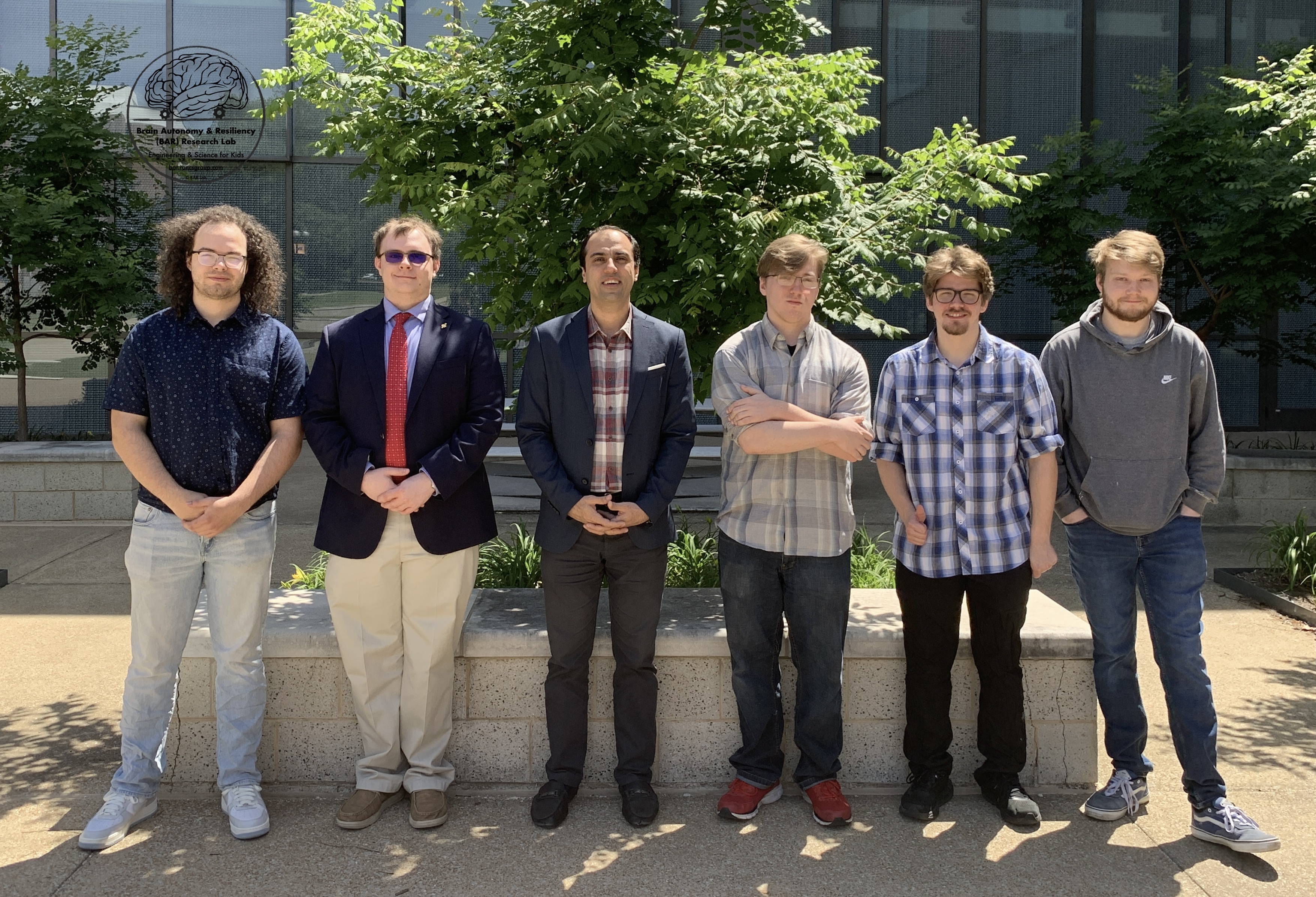
Today, the Brain Autonomy and Resiliency (BAR) Lab proudly hosted the senior design presentation and demonstration defense for two innovative student projects spanning Electrical and Computer engineering, Mechanical Engineering and computer science disciplines.
The first project, an autonomous ground vehicle for precision weed detection and targeted pesticide spraying, combines LiDAR-based navigation with a YOLO deep learning pipeline to identify weeds in real time and deliver precise pesticide application. This system demonstrates how AI and robotics can reduce chemical usage, lower operational costs, and promote sustainable agriculture.
The second project explored driver cognitive load in advanced driver assistance systems (ADAS) using an extended reality-based driving simulator integrated with EEG, heart rate variability, and eye-tracking data. Students analyzed how different ADAS functions impact attention, engagement, and workload, providing valuable insights for safer, human-centered autonomous vehicle design.
“It’s inspiring to see our students apply interdisciplinary skills in electrical, computer, mechanical, and software engineering to tackle real-world challenges,” says Dr. Saman Sargolzaei, BAR Lab director. “These projects reflect creativity, technical skill, and teamwork—and more importantly, they show the impact of mentorship and collaborative learning in preparing the next generation of engineers and scientists.”
Congratulations to all participating students (Thomas Paxton, Jesse Warren, Justin Finn, Arden Stanley, Seth Hatchett, and Connor Viana) for their hard work, innovation, and dedication. These projects showcase the hands-on, collaborative spirit that defines the BAR Lab and its commitment to advancing technology for societal benefit.
